Annual Revenue
$25.2M
Adjusted EBITDA
$4.51M
Asking Price
$16.5M (3.7x)
Business Description
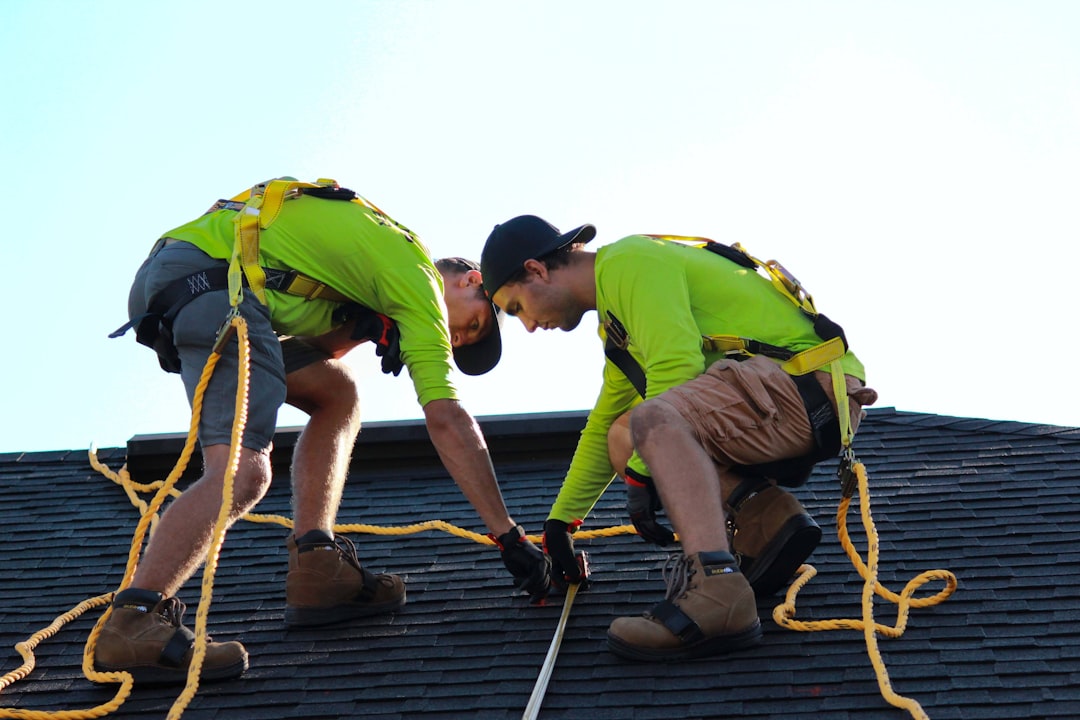
Tidewater Roofing Group is a fully licensed roofing contractor headquartered in Wilmington, North Carolina, serving the Cape Fear Coast region. The company generates revenue across three core service lines: residential re-roofing and repairs (52% of revenue, ~$13.1M), commercial roofing including flat roof systems (30%, ~$7.6M), and new construction roofing for residential builders (18%, ~$4.5M). A standout feature is TRG's deep penetration into the HOA and condominium association channel, which accounts for about 65% of residential revenue, providing quasi-recurring demand through planned multi-year roof replacement programs.
History & Context
Founded in 2004 by a former general contractor executive who saw an opportunity to bring project management discipline to the Cape Fear Coast roofing market. Starting with $140,000 in savings, an SBA microloan, and two crew leads, the company grew from $4M in its early years to $25.2M by FY2025. The inflection point came in 2007 when a property management firm gave TRG a trial contract for a 120-unit condominium community, establishing the institutional sales model that became the company's growth engine. By 2012, TRG was running 8 crews at $11M in revenue. The company now operates 14 crews and is one of the top five roofing contractors in New Hanover County.
Core Identity
- Business Name
- Tidewater Roofing Group
- Industry
- Specialty Trade Contracting — Roofing (NAICS 238160)
- Niche
- Full-service roofing contractor specializing in phased, multi-building roof replacement programs for HOA and condominium associations
- Model
- B2B/B2C hybrid — 52% residential (65% institutional HOA, 35% homeowner), 30% commercial, 18% new construction
- Years Operating
- 22 years (founded 2004)
Operational Profile
- Facilities
- Leased 24,600 sq ft facility — 10,200 sq ft office/warehouse plus 14,400 sq ft fenced yard for vehicle staging and bulk material storage
- Condition
- Serviceable — functional rather than impressive, with landlord-invested concrete pad, security fencing, and lighting
- Location Type
- Suburban-industrial, Wilmington, NC — industrial-flex park with good highway access to the core service territory
The Seller's Story
"I saw a gap: the Cape Fear Coast had plenty of small roofing crews chasing individual homeowner jobs, but nobody was building a roofing operation with the project management discipline and client communication standards that institutional property managers needed."
The founder started TRG in 2004 at age 38 after fifteen years at a large regional general contractor in Raleigh. He moved to Wilmington with $140,000 in savings, a $110,000 SBA microloan, two experienced crew leads, and a used F-350. The first three years were lean — revenue barely cracked $4M. The inflection came in 2007 when a property management firm gave TRG a trial contract on four buildings in a 120-unit community. That single relationship became the template: prove reliability, earn trust, let the manager's portfolio expand the pipeline. Now 60, the founder wants to transition into a less demanding phase of life, with a co-investment opportunity in a $12M mixed-use development providing the catalyst for sale.
— Founder, Tidewater Roofing Group
Market Landscape
Fragmented Market
The tri-county coastal roofing market is estimated at $1.4B-$1.8B annually, with New Hanover County accounting for $525M-$650M. TRG holds approximately 4.5% market share, occupying the competitive middle ground between national platforms and small local operators.
Aging Housing Stock
With a median home age of approximately 27 years in the service area, a large inventory of roofs is approaching or exceeding rated lifespan, supporting sustained organic demand for re-roofing services.
Insurance-Driven Demand
Insurance carriers in North Carolina increasingly require roof replacement as a condition of policy renewal for roofs older than 15 years, creating compliance-driven demand independent of storm activity. Premium increases of 25-50% following recent storms further accelerate replacement cycles.
Customer Base
Moderate Concentration with Institutional Anchors
The largest customer, a property management firm overseeing seven condominium associations, represents approximately 13% of revenue. Top 5 customers account for roughly 35% of total revenue. Approximately 450 customers were served in FY2025.
Quasi-Recurring Revenue
HOA and condo association clients operate on multi-year roof replacement schedules, creating a predictable pipeline that functions as recurring revenue despite no formal long-term contracts. The HOA channel accounts for about 65% of residential revenue at 40-42% gross margins.
Competitive Landscape
Institutional Channel Moat
TRG is the only contractor in New Hanover County with a dedicated institutional sales capability focused on the HOA/condo segment. Two national restoration platforms focus on commercial and insurance work. One regional contractor ($30-40M) pursues commercial but not HOA accounts.
Barrier to Entry
NC contractor licensing requirements, established supplier relationships, multi-crew coordination capability, and the trust-based nature of HOA management contracts create meaningful barriers for new entrants in the institutional segment.
Strategic Position
Population Growth Tailwind
The greater Wilmington area added approximately 18,000 residents between 2020 and 2025, driving new construction activity and eventually feeding the re-roofing pipeline as those homes age.
Regulatory Protection
North Carolina building codes impose wind uplift and impact resistance standards requiring professional installation, protecting licensed contractors from unlicensed competition and DIY substitution.
Institutional HOA Channel
Deep penetration into HOA and property management relationships producing quasi-recurring revenue at 40-42% gross margins, with 75% annual repeat rates and 12-24 months of pipeline visibility — a competitive advantage no local competitor has replicated.
Capital-Light Operations
Maintenance CapEx at 1.8% of revenue, cash conversion cycle of 18 days, working capital needs of ~5% of incremental revenue. Materials ordered per-project with 3-5 day lead times and minimal inventory carrying costs.
Proven Labor Model
70/30 in-house-to-subcontractor ratio balances quality control with capacity flexibility. 14 crews with experienced crew leads averaging 7 years tenure. Revenue per employee of $225K within the $180K-$260K industry range.
Assets & Facilities
- Equipment fleet of 26 trucks/trailers, 5 boom lifts, 4 material conveyors with book value of $1.56M (replacement cost $2.52M), average fleet age 5 years
- 22-year brand carrying significant goodwill on the Cape Fear Coast, Google Business profile at 4.6 stars with 340+ reviews
Technology & Systems
- QuickBooks Enterprise for financial reporting with quarterly CPA compilation
- Significant technology upside — absence of CRM, digital estimating, and project management software represents clear efficiency opportunity
Management & Team
- Operations Manager (13 years tenure) — manages daily scheduling, material ordering, quality inspections; highly capable field operator
- Office Manager (9 years) and Lead Estimator (5 years) provide administrative and estimating backbone with strong institutional knowledge
Transaction Structure
Capital Stack
$8.5M senior bank debt (1.9x), $3.6M seller note at 6.5% fixed with 24-month interest-only (0.8x), $4.4M buyer equity (1.0x) — total 2.7x leverage on adjusted EBITDA
Seller Financing Signal
The seller's willingness to carry a $3.6M subordinated note demonstrates confidence in cash flow durability and creates alignment post-closing. Annual debt service of ~$1.7M yields DSCR of 2.6x on adjusted EBITDA.
Transition Plan
Founder Advisory Period
Structured 12-month advisory role to transfer institutional client relationships (particularly top 15 accounts representing 50% of revenue), estimating methodology, and operational knowledge.
License and Key Personnel
NC contractor license transfer required. Key employee retention critical — Operations Manager, Office Manager, and Lead Estimator are essential to continuity. Non-compete agreement covering Cape Fear Coast for 3-5 years.
Growth Opportunities
CRM and Sales Function
No formal sales team or CRM system exists. The founder's personal network drives 40% of new business. A CRM and dedicated BD capability would institutionalize the sales pipeline.
Geographic Expansion
Adjacent Brunswick and Pender counties represent addressable markets TRG serves only occasionally. Brunswick County has seen rapid residential growth with aging housing stock approaching replacement cycles.
Digital Marketing
Approximately 25% of leads come through the website and Google with minimal $82K investment (0.3% of revenue vs. 2-4% industry norm for growth-oriented contractors).
Key Considerations
Founder Dependency Risk
The founder personally holds the contractor license, manages all estimates above $200K, maintains the top 15 institutional relationships, and approves all subcontractor agreements — the single largest transition risk.
Hurricane Exposure
The Cape Fear Coast sits in a high-risk hurricane zone. While storms create surge demand, extended calm periods could depress the insurance-driven segment below baseline levels.
Lease Expiration
Primary facility lease expires in 2029. Renewal terms not yet negotiated, and scaling beyond 16 crews would require additional yard space.